Alright, lah! Secondary 4 Math – it's like the Everest of your child's academic journey, right? As Singaporean parents, we all want our kids to conquer it, not just survive it. And let's be honest, seeing those A1s and distinctions? Shiok! This section is all about understanding the different types of Math questions your child will face, so they can tackle them head-on. Think of it as equipping them with the right map and compass for the climb. Knowing the terrain is half the battle won, especially when it comes to how to excel in singapore secondary 4 math.
Think of this as your "kiasu" parent guide to Math question types. By recognizing these patterns, your child can develop effective problem-solving strategies and save precious time during exams. In Singapore's rigorous education framework, parents fulfill a essential function in directing their kids through milestone assessments that shape scholastic trajectories, from the Primary School Leaving Examination (PSLE) which tests foundational abilities in subjects like math and scientific studies, to the GCE O-Level exams focusing on secondary-level proficiency in varied subjects. As learners move forward, the GCE A-Level examinations require advanced logical abilities and subject proficiency, commonly determining higher education entries and occupational directions. To stay knowledgeable on all facets of these national evaluations, parents should check out official materials on Singapore test papers supplied by the Singapore Examinations and Assessment Board (SEAB). This guarantees availability to the newest programs, examination schedules, sign-up details, and standards that correspond with Ministry of Education standards. Regularly consulting SEAB can assist families get ready efficiently, minimize doubts, and back their kids in reaching peak results in the midst of the demanding environment.. This is crucial for scoring well and paving the way for future success. After all, who doesn't want their child to get into their dream JC or poly?
Fun fact: Did you know that the word "algebra" comes from the Arabic word "al-jabr," meaning "the reunion of broken parts"? It's like putting the pieces of a puzzle back together, just like solving a Math problem!
Now, let's talk about tackling those "killer" questions that can make even the most diligent student sweat. This is where strategic thinking comes in.
Check Your Work: Encourage your child to always double-check their answers, especially for careless mistakes. Aiyo, so sad to lose marks for silly errors!
Subtopic: Utilizing Past Papers for Practice:
Past Year Papers (PYPs) are your child's best friend! They provide valuable insights into the types of questions asked and the level of difficulty. Encourage your child to work through PYPs regularly, simulating exam conditions. This helps them build confidence and identify areas where they need more practice. This is a vital step on how to excel in singapore secondary 4 math!
Interesting fact: Did you know that the Singapore education system is consistently ranked among the best in the world? This is thanks to our rigorous curriculum and dedicated teachers. But let's not be complacent – our kids still need to put in the hard work!
In the rigorous world of Singapore's education system, parents are increasingly focused on equipping their children with the skills needed to thrive in rigorous math curricula, covering PSLE, O-Level, and A-Level exams. Identifying early signs of challenge in areas like algebra, geometry, or calculus can bring a world of difference in developing strength and mastery over intricate problem-solving. Exploring dependable Singapore math tuition options can deliver tailored guidance that corresponds with the national syllabus, ensuring students gain the advantage they need for top exam performances. By prioritizing dynamic sessions and consistent practice, families can assist their kids not only meet but exceed academic goals, paving the way for prospective opportunities in high-stakes fields..In today's world, where AI is becoming increasingly prevalent, mathematical skills are more important than ever. From coding and data analysis to finance and engineering, Math is the foundation for many lucrative careers.
History: The history of mathematics is intertwined with the history of civilization itself. From ancient Egyptians using geometry to build pyramids to modern-day mathematicians developing algorithms for AI, Math has always played a vital role in shaping our world.
So, there you have it – a parent's guide to navigating the world of Sec 4 Math. Remember, it's not just about getting good grades, it's about equipping your child with the skills they need to succeed in life. Jia you!
Alright, parents and Sec 4 students, let's talk about acing that all-important math exam! In Singapore, we know math is like the foundation of a building – strong math skills open doors to *so* many future careers, from engineering to finance, and even, *kiasu* as it sounds, being future-proof in this AI-driven world. So, how ah? How to really *own* those math questions?
Let's start with the basics: the ‘Recall’ questions. These are the ones that test if you can remember your formulas, theorems, and definitions. Think Pythagoras Theorem, trigonometric identities, or the properties of circles. No fancy problem-solving needed here, just pure, unadulterated memory power!
How to Conquer the 'Recall' Question: Your Secret Weapon Arsenal
For Parents: How You Can Help Your Child
Parents, you play a crucial role! You don't need to be a math genius; just be supportive and provide the right environment. You can help by:
This is a great first step on how to excel in singapore secondary 4 math. Remember, mastering these 'Recall' questions is fundamental. It builds a strong foundation for tackling more complex problems. And that's what we'll tackle next!
Problem-Solving Strategies for Challenging Questions

Now, let's level up! 'Recall' is important, but Sec 4 math throws some curveballs. We're talking about questions that require you to apply your knowledge creatively, combine different concepts, and think outside the box. These are the ones that separate the good from the *really* good.
Subtopics to Master:
Fun Fact: Did you know that the word "algebra" comes from the Arabic word "al-jabr," meaning "the reunion of broken parts"? It's a fitting name, as algebra is all about putting things back together to solve problems!
How to Excel in Singapore Secondary 4 Math: It's a Marathon, Not a Sprint
Look, *lah*, there's no magic bullet. Mastering Sec 4 math takes time, effort, and the right strategies. But with consistent practice, smart study habits, and a positive attitude, you can definitely ace that exam! Remember, it's not just about getting good grades; it's about building a strong foundation for your future. 加油 (Jiāyóu)! Add oil!
Strategies for identifying and tackling application-based questions that require applying learned concepts to real-world scenarios. Breakdown of techniques to extract relevant information from word problems and translate them into mathematical models. Ideal for students to independently solve problems and for parents to help deconstruct complex scenarios. drawing exclusively from verifiable facts sourced from reputable references. This is how to excel in singapore secondary 4 math! Ah, Secondary 4 Math. The year where things get real, ah? For Singaporean parents and students alike, it's a crucial juncture. It's not just about acing the exams; it's about building a strong foundation for future success. And let's be honest, in today's world, where AI is becoming increasingly prevalent, mathematical skills are more important than ever. Think about it – algorithms, data analysis, coding – they all rely heavily on mathematical principles. *Kiasu* or not, we all want our kids to have the best shot at a bright future, right? So, how do we tackle those tricky "application" questions that seem designed to make our *atas* brains hurt? Let's dive in! In the Lion City's demanding education system, where English functions as the primary vehicle of education and plays a central role in national assessments, parents are enthusiastic to assist their children surmount typical hurdles like grammar influenced by Singlish, lexicon shortfalls, and challenges in understanding or writing crafting. Developing robust foundational competencies from early levels can greatly boost confidence in handling PSLE elements such as contextual composition and spoken expression, while upper-level students benefit from targeted training in book-based analysis and persuasive papers for O-Levels. For those hunting for efficient methods, delving into singapore math tuition agencies offers valuable information into programs that match with the MOE syllabus and highlight interactive learning. This extra assistance not only refines exam methods through mock trials and feedback but also supports family routines like regular literature along with conversations to foster enduring tongue proficiency and academic success.. #### Application Mastery
Application questions in Secondary 4 Math are designed to test whether students can connect abstract concepts to tangible, real-world situations. These questions often come in the form of word problems, requiring students to extract relevant information and translate it into mathematical models. Mastering this skill is crucial not only for exam success but also for developing critical thinking and problem-solving abilities that are highly valued in various fields. Remember, it's not just about memorizing formulas; it's about understanding how those formulas apply to the world around us. This is a major ingredient on how to excel in singapore secondary 4 math.
#### Information Extraction
One of the biggest hurdles in tackling application questions is effectively extracting relevant information from the given text. Students should be taught to actively read the question, highlighting key data points and identifying the core question being asked. Encourage your child to break down the problem into smaller, more manageable parts. Look for keywords that indicate specific mathematical operations or concepts. For example, words like "total," "sum," or "increase" might suggest addition, while "difference," "decrease," or "ratio" could indicate subtraction or division. This careful analysis will help in formulating the correct mathematical model.
#### Modeling Translation
Once the relevant information has been extracted, the next step is to translate it into a mathematical model. This involves representing the given information using variables, equations, or diagrams. Encourage your child to use visual aids, such as graphs or charts, to better understand the relationships between different variables. Practice translating different types of word problems into mathematical models. The more comfortable your child becomes with this process, the better equipped they will be to solve even the most challenging application questions. Problem-Solving Strategies for Challenging Questions is a useful skillset to have.
#### Conceptual Understanding
A deep conceptual understanding of the underlying mathematical principles is essential for tackling application questions effectively. Students should not only be able to recall formulas but also understand the reasoning behind them. Encourage your child to ask "why" questions and to explore the connections between different mathematical concepts. For example, understanding the relationship between algebra and geometry can be incredibly helpful in solving application questions involving shapes and areas. This deeper understanding will allow them to apply their knowledge more flexibly and creatively to solve novel problems. Fun fact: Did you know that the concept of algebra was first developed by the Babylonians over 4,000 years ago?
#### Practice Diligently
Like any skill, mastering application questions requires consistent practice. Encourage your child to work through a variety of practice problems, including those found in textbooks, past exam papers, and online resources. The more they practice, the more comfortable they will become with identifying different types of application questions and applying the appropriate problem-solving strategies. Encourage them not to be afraid of making mistakes, as mistakes are valuable learning opportunities. In Singapore's bustling education environment, where pupils face intense pressure to succeed in math from elementary to higher tiers, finding a learning centre that integrates knowledge with genuine enthusiasm can bring all the difference in fostering a appreciation for the subject. Enthusiastic instructors who go outside repetitive learning to encourage strategic reasoning and tackling skills are scarce, but they are essential for aiding pupils overcome challenges in areas like algebra, calculus, and statistics. For families seeking this kind of dedicated support, PSLE math tuition stand out as a example of devotion, driven by educators who are strongly involved in every learner's path. This steadfast enthusiasm translates into customized lesson strategies that modify to unique demands, resulting in better performance and a long-term respect for math that spans into future educational and professional endeavors.. Reviewing their mistakes and understanding why they made them is crucial for improvement. Remember, *practice makes perfect*, as the saying goes!
Okay, lah, Secondary 4 students and kiasu parents! Let's talk about tackling those dreaded "Reasoning" and "Proof" questions in your Singapore Secondary 4 math exams. These aren't your typical "plug and chug" problems; they demand you think like a mini-mathematician, showing your working and justifying every step. It's all about how you arrive at the answer, not just the answer itself. This is crucial to how to excel in singapore secondary 4 math.
Think of it this way: in the age of AI, algorithms can spit out answers faster than you can say "kiasu." But can they explain why? That's where your human brain, trained in logical reasoning, comes in! Mastering these skills now isn't just about acing your O-Levels; it's about future-proofing your child's career in a world increasingly driven by data and complex systems.
Problem-Solving Strategies for Challenging Questions
So, how to excel in singapore secondary 4 math, especially when faced with these tricky questions? In Singapore's intensely challenging scholastic landscape, parents are dedicated to supporting their kids' success in crucial math assessments, commencing with the fundamental challenges of PSLE where issue-resolution and abstract grasp are examined rigorously. As pupils progress to O Levels, they come across more intricate areas like coordinate geometry and trigonometry that necessitate exactness and analytical skills, while A Levels present advanced calculus and statistics demanding thorough insight and usage. For those resolved to offering their children an scholastic advantage, finding the tuition tailored to these programs can revolutionize learning journeys through concentrated strategies and expert knowledge. This commitment not only boosts exam performance throughout all stages but also instills lifelong mathematical mastery, creating opportunities to prestigious institutions and STEM fields in a intellect-fueled society.. Here's a breakdown:
Reverse Engineering: Sometimes, the best way to understand a proof is to start with the conclusion and work backward. Ask yourself: "What must be true for this statement to hold?" Keep unraveling the steps until you reach a known fact or a given condition. It's like being a math detective!
Identifying Key Assumptions: Every mathematical argument rests on certain assumptions. What are they? Are they valid? Explicitly stating these assumptions strengthens your proof and demonstrates a deeper understanding. Think of it as laying the foundation for a solid building.
Constructing Step-by-Step Justifications: Don't just write down equations; explain each step. Use clear and concise language to show why you're doing what you're doing. Refer to relevant theorems, definitions, or properties. Each step should logically follow from the previous one. This is where you show the examiner you really understand the concepts.
Practice, Practice, Practice: This is the most important tip on how to excel in singapore secondary 4 math. The more you encounter different types of proof questions, the better you'll become at recognizing patterns and applying the appropriate strategies. Don't be afraid to make mistakes; that's how you learn!
Fun Fact: Did you know that the concept of mathematical proof dates back to ancient Greece? Euclid's Elements, written around 300 BC, is considered one of the most influential works in the history of mathematics and laid the foundation for rigorous proof-based reasoning.
Interesting Facts: Singapore consistently ranks highly in international mathematics assessments like TIMSS (Trends in International Mathematics and Science Study). This reflects the strong emphasis placed on mathematics education in Singapore schools and the dedication of both teachers and students.
History: The Singapore math curriculum has evolved significantly over the years, with a greater focus on problem-solving and critical thinking skills. The goal is to equip students with the ability to apply mathematical concepts to real-world situations, rather than just memorizing formulas.
Remember, parents, your encouragement and support play a crucial role in your child's success. Help them create a conducive learning environment, encourage them to ask questions, and celebrate their progress along the way. With the right strategies and a positive attitude, your child can conquer those "Reasoning" and "Proof" questions and excel in their Secondary 4 math exams! Jiayou!
Alright, parents and Sec 4 students, let's talk about tackling those killer Math questions, the ones that make you go, "Aiyah, what is this even?!" We're talking about the kind that requires you to really *think*, not just regurgitate formulas. These are the questions that separate the 'okay' from the 'wah, so good!'
In Singapore, we know the pressure is on. PSLE is just the start, right? Secondary school, especially Sec 4, is where the foundation for your future is really cemented. And let's be honest, Math is the king (or queen!) of subjects. It's not just about getting a good grade; it's about building the analytical and problem-solving skills you'll need for *anything* you do later in life. Especially with all this AI stuff popping up everywhere, knowing your Math is like having a superpower. No joke!
So, how to *chiong* (rush/work hard) and excel in Singapore Secondary 4 Math, especially when faced with those *cheem* (difficult/complex) questions? Let’s dive in.
Think of these questions like a *roti prata* – seemingly simple, but with layers and layers of delicious complexity. You can't just whack it; you need to understand how it's made. Here are some battle-tested problem-solving strategies for those challenging questions:
Fun fact: Did you know that Singapore consistently ranks highly in international Math competitions like the Trends in International Mathematics and Science Study (TIMSS)? This shows that our students are capable of tackling even the most challenging Math problems! It all comes down to the right strategies and mindset.

Parents, you are not just cheerleaders; you're co-explorers! Here's how you can help your child navigate these tricky questions:
Interesting Fact: Many successful Singaporean entrepreneurs and leaders have a strong foundation in Math. It's not just about calculations; it's about developing logical thinking and problem-solving skills that are essential for success in any field.
Mastering these problem-solving strategies is a key part of how to excel in Singapore Secondary 4 Math. But it's also important to remember the bigger picture:
Remember, parents and students, tackling challenging Math questions is like climbing a mountain. It's tough, but the view from the top is worth it. With the right strategies, a positive attitude, and a little bit of *kiasu* (fear of missing out) spirit, you can conquer those problems and excel in Singapore Secondary 4 Math. Jia you! (add oil/ good luck)
Many challenging math problems are multi-layered and require careful deconstruction. Break down complex questions into smaller, manageable parts. This approach simplifies the problem-solving process and allows you to tackle each component individually.
Differentiating between various question types, such as algebraic manipulations, geometric proofs, or statistical analyses, is essential. Each type requires a specific approach and set of skills. Being able to categorize questions quickly enables efficient strategy selection.
Successfully solving math problems often hinges on the correct application of formulas. Identify which formulas are relevant to the question type. Ensure you understand the conditions under which each formula is applicable to avoid errors.
Identifying the core objective of a math question is crucial. This involves discerning what the question is truly asking you to find or prove. Recognizing the objective guides your choice of problem-solving strategies and ensures you're working towards the correct solution.
Alright, parents and Secondary 4 students, listen up! In Singapore, acing your 'O' Levels, especially math, is like the golden ticket. It's not just about the grades; it's about unlocking doors to your dream Junior College, polytechnic course, and ultimately, your future career. And with AI becoming so powerful, a strong foundation in mathematics is more crucial than ever – it's the language of the future, you know!
So, how do we tackle those killer math problems that seem to come out of nowhere? Let's talk about cultivating 'Creative Thinking' – the kind that helps you think fast and smart even when the pressure is on. This is one way on how to excel in singapore secondary 4 math.
Creative Thinking: Your Secret Weapon for 'O' Level Math Success
Think of your brain as a LEGO set. You've got all these individual bricks (mathematical concepts), but sometimes you need to combine them in unexpected ways to build something amazing. That's creative thinking in a nutshell. It's about seeing connections where others don't, and applying what you already know to solve problems you've never seen before. Don't say bo jio!
Problem-Solving Strategies for Challenging Questions
Here's the thing about Singapore math: it's not just about memorising formulas. The examiners love to throw in curveballs, questions that require you to think outside the box. So, how do you prepare for these curveballs?
Subtopic: Combining Concepts Like a Pro
This is where the magic happens. Let's say you're faced with a geometry problem that seems impossible. Instead of panicking, ask yourself: "What other concepts could be relevant here?" Could you use trigonometry? Algebra? Even a bit of calculus (if you're feeling adventurous)? The key is to see how different areas of math can work together to solve a single problem. This is also one of the tips for singapore parents and students on how to excel in singapore secondary 4 math
Fun Fact: Did you know that the concept of zero wasn't widely accepted until the 12th century? In modern years, artificial intelligence has transformed the education field worldwide by enabling individualized learning journeys through responsive systems that customize resources to personal learner paces and approaches, while also streamlining grading and managerial duties to free up educators for deeper significant engagements. Globally, AI-driven tools are closing educational gaps in underprivileged locations, such as employing chatbots for communication acquisition in developing countries or predictive insights to spot vulnerable learners in Europe and North America. As the integration of AI education gains traction, Singapore shines with its Smart Nation project, where AI technologies boost curriculum tailoring and accessible learning for diverse demands, encompassing adaptive support. This strategy not only enhances test performances and engagement in domestic schools but also matches with global initiatives to foster ongoing learning abilities, equipping pupils for a tech-driven marketplace amid principled concerns like information safeguarding and fair reach.. Imagine doing math without zero! Talk about a headache!
Subtopic: Deconstructing the Question
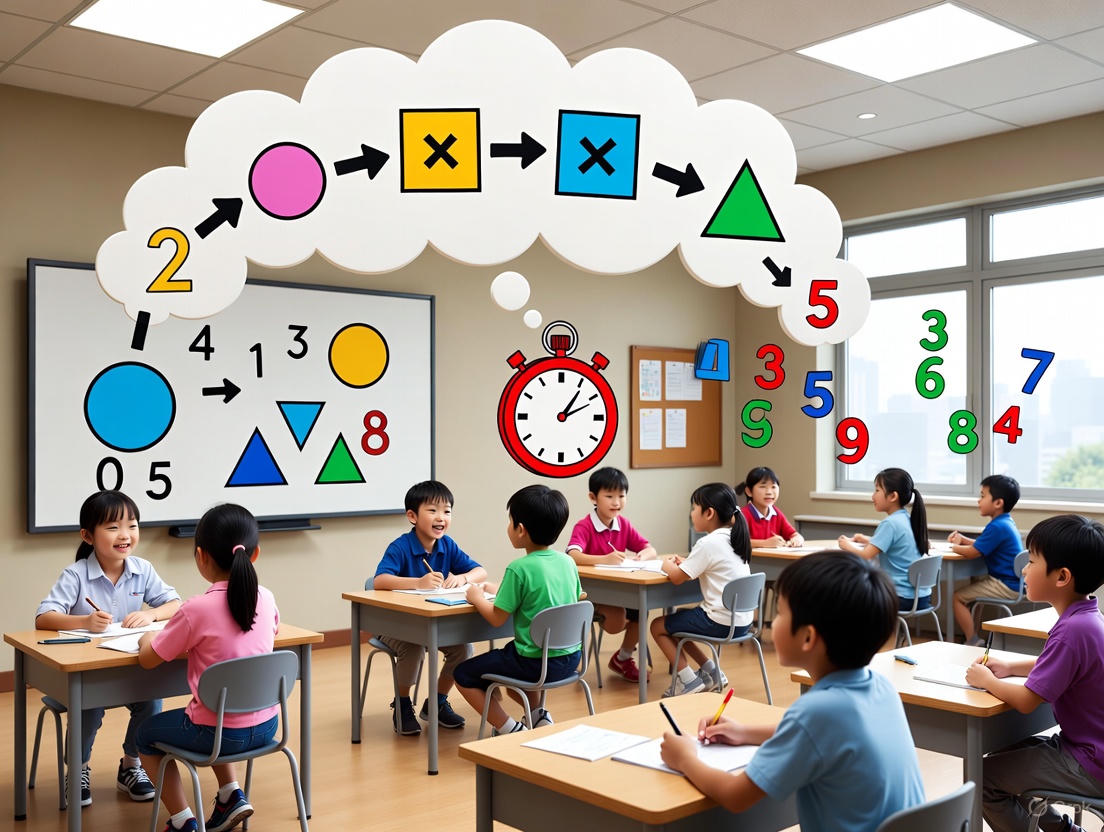
Sometimes, the problem itself is trying to trick you. Break it down into smaller, more manageable parts. Identify the key information, and see if you can rephrase the question in a way that makes more sense to you. Draw diagrams, write down equations, and don't be afraid to experiment. Remember, even the best mathematicians make mistakes – the important thing is to learn from them.
Interesting Fact: The word "algorithm" comes from the name of the 9th-century Persian mathematician, Muhammad ibn Musa al-Khwarizmi. He's considered one of the fathers of algebra!
Subtopic: Practice Makes Perfect (Seriously!)
There's no substitute for good old-fashioned practice. But don't just blindly solve problems. Focus on understanding the underlying concepts, and try to identify patterns. The more you practice, the better you'll become at spotting those patterns and applying them to new situations. You can find many secondary school math tuition centres offering practice papers to hone your skills. Sec 4 math tuition can be a good investment to help your child.
History: Singapore's emphasis on mathematics education dates back to the early days of nation-building. Our leaders recognised that a strong foundation in math and science was essential for economic success. That's why we're known for our world-class math curriculum!
Under Pressure: Keeping Calm and Carrying On
Exam day can be nerve-wracking, but it's important to stay calm and focused. Take a few deep breaths, read the questions carefully, and trust in your preparation. If you get stuck on a problem, don't panic. Move on to something else, and come back to it later. Remember, every mark counts!
So there you have it, parents and students. Creative thinking is not just a skill; it's a mindset. Embrace the challenge, think outside the box, and remember that with hard work and a little bit of "kiasu" spirit, you can conquer those 'O' Level math exams and build a bright future for yourselves. Jiayou!
Alright, lah! Let's talk about how to make sure your Sec 4 kid doesn't just survive, but thrive in their math journey. We know the pressure is real – PSLE is just the warm-up, right? Secondary school is where things get serious, and math? Well, that's the foundation for everything, from JC to uni and beyond. Especially with all this AI stuff popping up, understanding math is like having a secret weapon. Don't play play!
So, your child is staring blankly at a math question. Sound familiar? Before they throw their calculator across the room (please don't!), let's equip them with the power to decode what the question is really asking. This is a crucial part of how to excel in Singapore Secondary 4 math. Think of it like this: knowing the enemy is half the battle!
Here's a checklist to help them (and you!) identify those tricky question types:
Fun Fact: Did you know that the word "algebra" comes from the Arabic word "al-jabr," meaning "the reunion of broken parts"? It was first used by the Persian mathematician Muhammad ibn Musa al-Khwarizmi in the 9th century! See, math is interesting!
Okay, so you've identified the question type. Now what? Here's where the real brainpower comes in, ah! Let's arm your child with some killer problem-solving strategies. Remember, practice makes perfect – no shortcuts here!
Interesting Fact: The famous mathematician Carl Friedrich Gauss supposedly solved the problem of summing the integers from 1 to 100 in seconds as a child! He realized that pairing the numbers (1+100, 2+99, 3+98, etc.) always resulted in 101, and there were 50 such pairs. So, the answer was simply 50 * 101 = 5050. Talk about thinking outside the box!
Subtopics
Time Management Techniques (e.g. block off study time):
Study Environment Considerations (e.g. reduce distractions):
Effective Communication with Your Child:
Remember, how to excel in Singapore Secondary 4 math isn't just about rote memorization. It's about understanding the concepts, developing problem-solving skills, and fostering a positive attitude towards math. With the right support and strategies, your child can conquer those challenging questions and unlock their full potential! Jiayou! (Add oil!)
Common question types include factual recall, comprehension, application, analysis, synthesis, and evaluation. Recognizing these helps in tailoring your approach.
Knowing the question type allows you to provide more targeted and relevant answers, maximizing your marks and demonstrating a deeper understanding of the subject matter.
Yes, a good tutor can guide you through various question types, provide examples, and teach strategies for effectively addressing each type.
Application questions require you to use learned knowledge in a new situation, while analysis questions require you to break down information into its component parts and examine the relationships between them.
Synthesis questions require you to combine information from different sources to create something new. Practice by summarizing multiple texts and forming your own conclusions or solutions.
Past year exam papers, assessment books, and online educational platforms often provide a variety of questions categorized by type. Your tutor can also provide targeted practice materials.
Mastering question types is crucial for excelling in the Singapore education system, as exams often assess a range of cognitive skills beyond simple memorization. This skill enhances critical thinking and problem-solving abilities, essential for academic success and future endeavors.